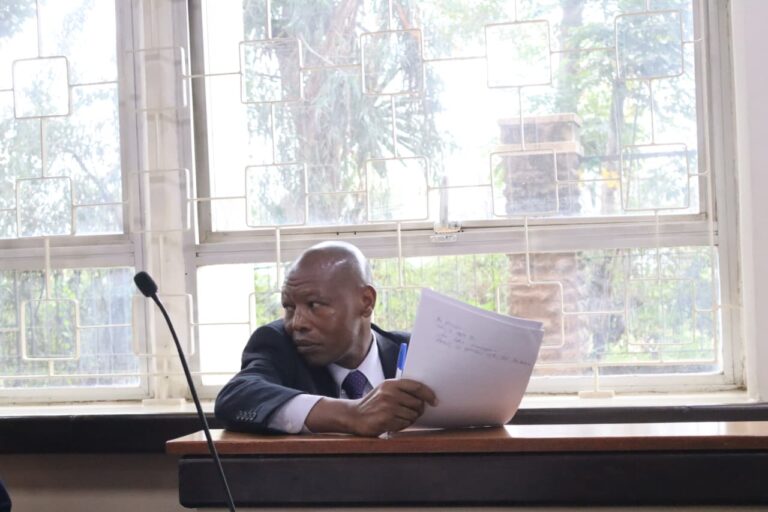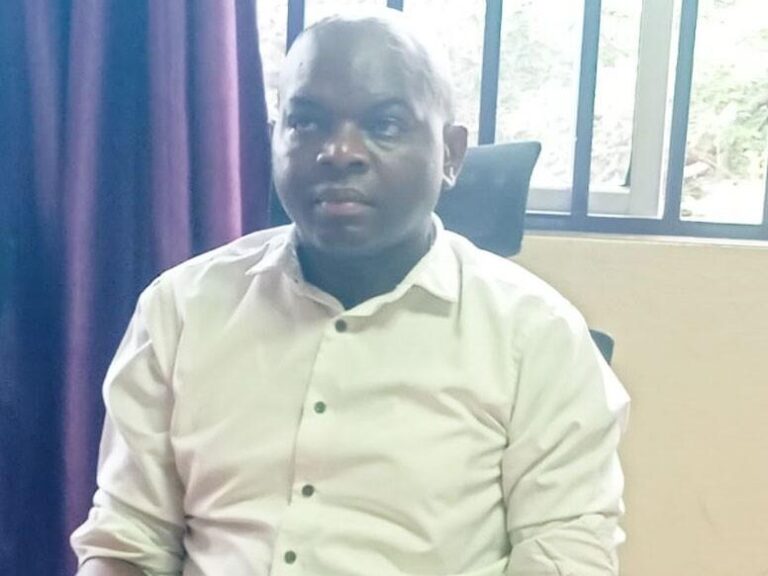
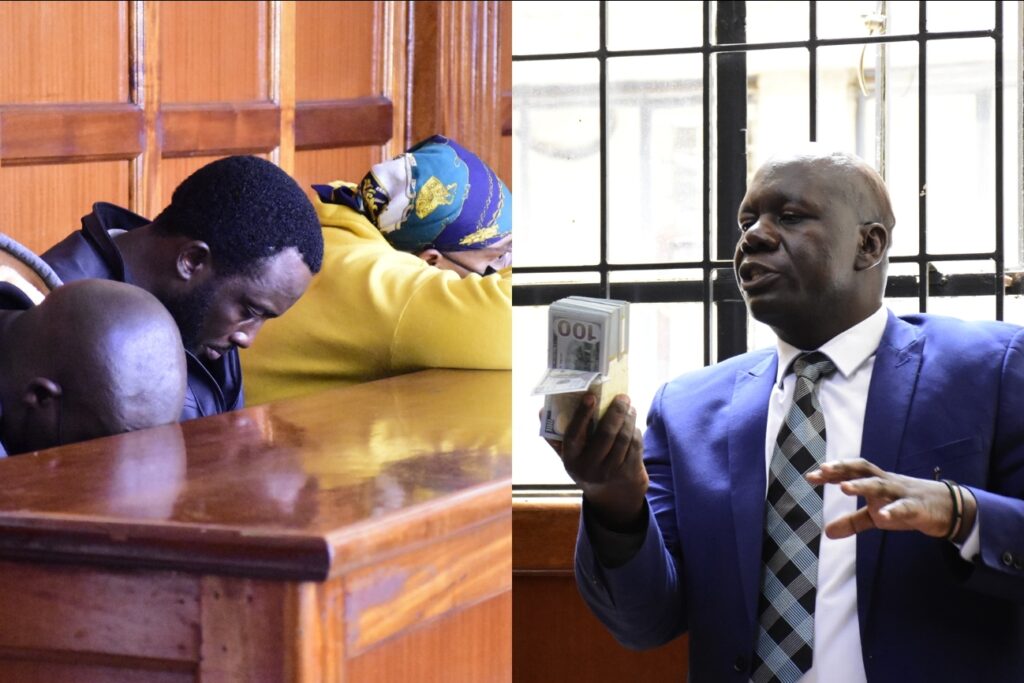
On 7th May 2026, the prosecution continued presenting evidence in a case involving alleged possession of forged foreign currency, counterfeit Kenyan notes, and illegal firearm possession, as expert witnesses testified before the court regarding the origin of the firearm and the authenticity of the recovered notes.
The case dates back to an operation conducted on September 7, 2023, at Villa Mwe in Garden Estate, Nairobi, where suspects Nelson Fru, Roland Johnson, Joseph Gikonyo, Alice Kavata, Ian Wekesa, Duncan Muchai, and Festo Wamwayi were arrested following allegations of conspiracy to defraud a foreign national of USD 400,000 using suspected fake currency.
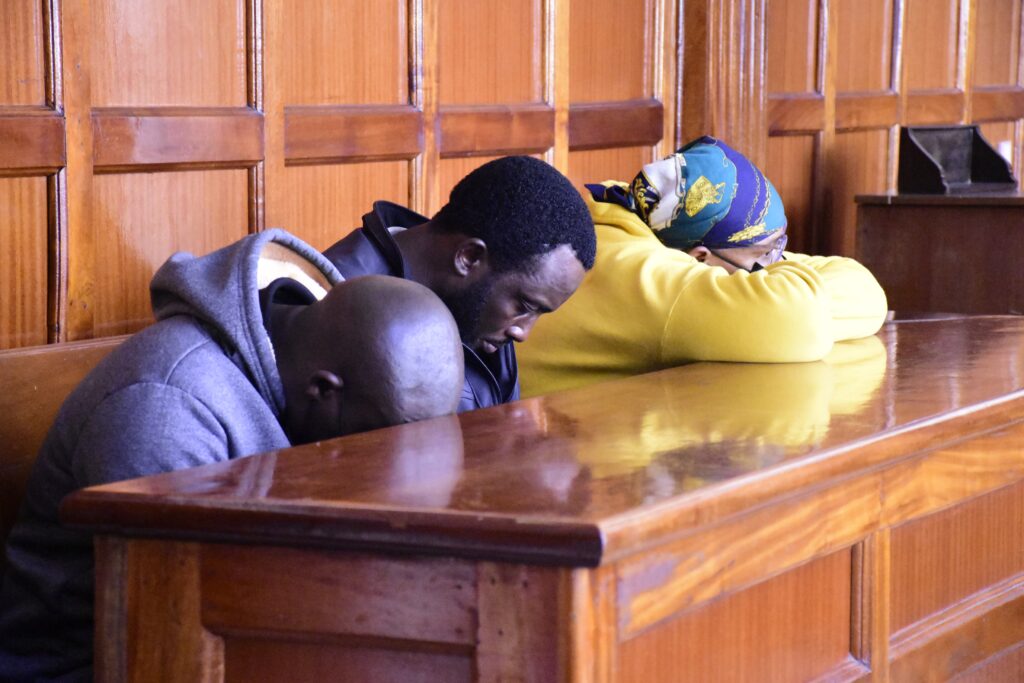
According to the charge sheet seen by kauntinews.com, the accused face multiple charges, including conspiracy to defraud, possession of forged banknotes, possession of papers intended for forgery, unlawful presence in Kenya, and unlawful possession of a firearm and ammunition.
During cross-examination, a ballistic witness told the court that the firearm in question had been recovered and forwarded to the forensic laboratory for analysis.
The witness explained that the gun had initially been issued to him in 2007 before it was allegedly stolen in 2009. He further stated that officers are required to confirm possession of issued firearms on a fortnightly basis.
The witness revealed that he only learned of the firearm’s recovery while in Uganda in 2023, after being informed that several suspects had been arrested in connection with the matter.
When pressed by the defense regarding whether police usually circulate an official notice once a missing firearm is recovered, he admitted that he had no knowledge of such a circular.
The court also heard testimony from Inspector Martin Gitahi, a document examiner attached to the Directorate of Criminal Investigations under the National Police Service.
Gitahi testified that on September 14, 2023, exhibits accompanied by an exhibit memo were received at the documents examination laboratory from Sergeant Rhemas Musungu of the Operations Support Unit.
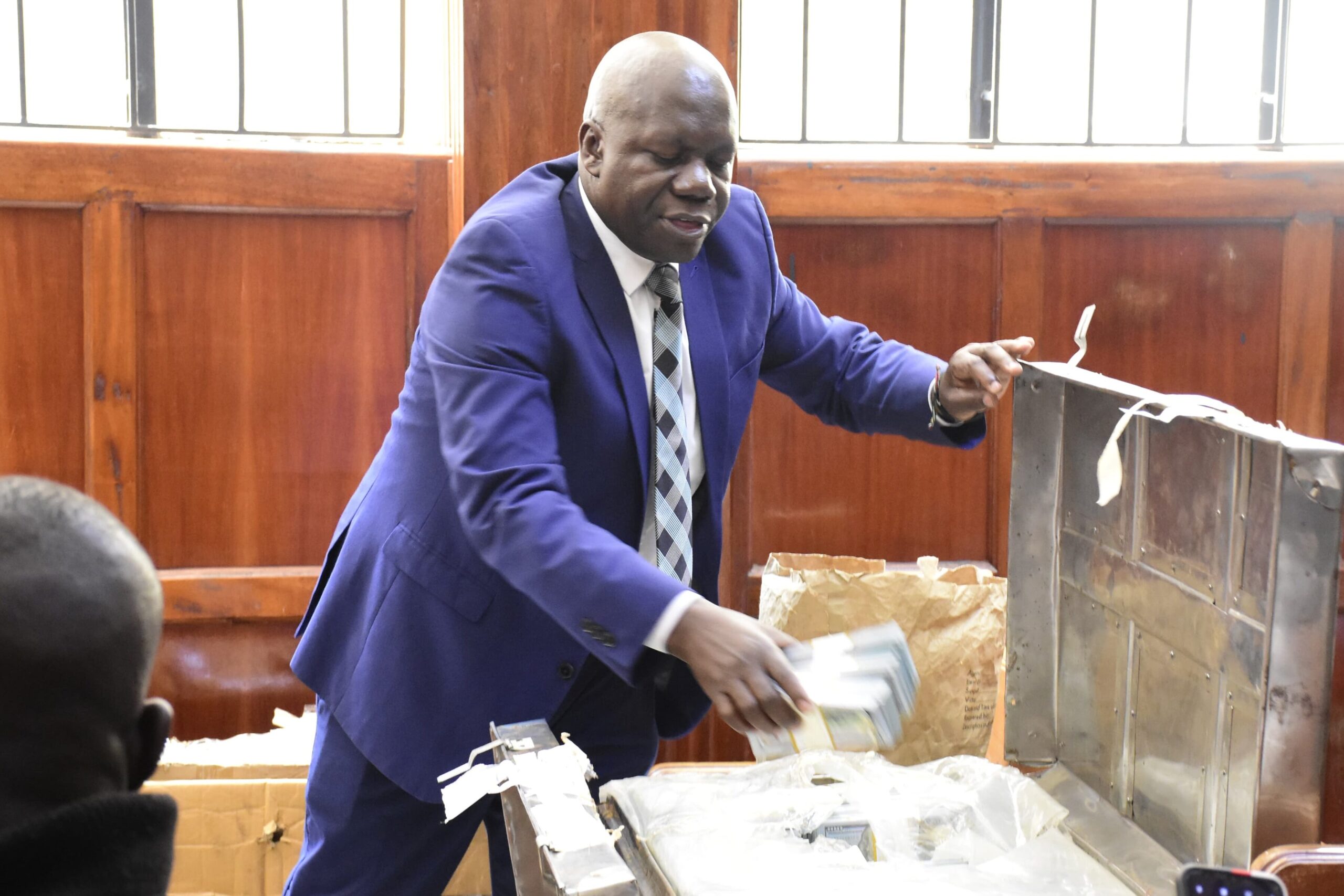
According to Gitahi, the exhibits included four metallic boxes, bundles of papers resembling US dollar notes, white paper bundles, and several pieces bearing images of Kenyan one-thousand-shilling notes.
He noted that some of the questioned notes had repeated serial numbers, lacked security threads, microprints, watermarks, and other security features associated with genuine currency. After examining and comparing the exhibits with authentic samples, Gitahi concluded that they were counterfeit.
He explained that the US dollar notes were simply papers cut and sized to resemble real currency, lacking color-shifting features and failing ultraviolet light security tests.
Regarding the Kenyan currency, he testified that the papers did not meet the quality and security standards of genuine one-thousand-shilling notes. Under ultraviolet examination, the notes fluoresced brightly and did not reveal any legitimate security features.
Under cross-examination by the defense, Gitahi admitted he did not know who signed the inventory of the recovered items, stating he only knew the officer who delivered the exhibits to the lab.
He further confirmed that he had not attached any report from the Federal Reserve or external institution to support his findings, asserting that his conclusions were based on professional opinion, training, and comparison with reference notes held by his department.