For millions of African women, work does not end when the workday is over.It continues at home caring for children, preparing meals, tending to families, and managing households, often without pay or recognition.
Yet despite carrying much of the burden that keeps economies and communities running, women remain largely excluded from the rooms where decisions about work, labor, and economic policy are made.
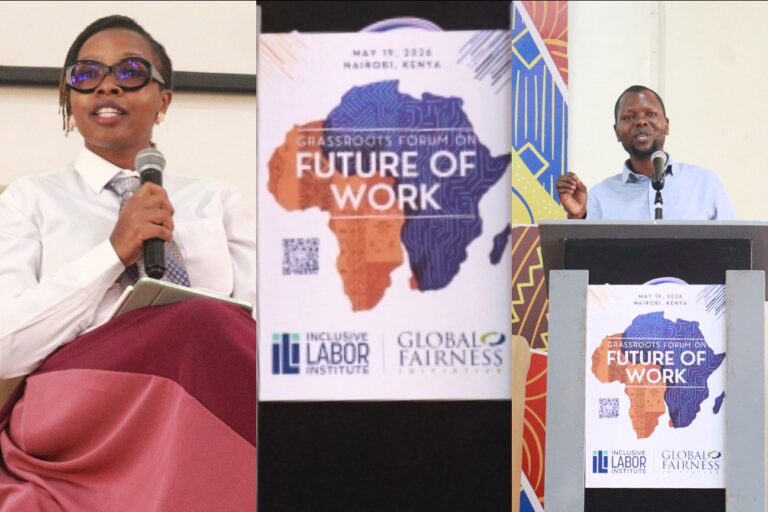
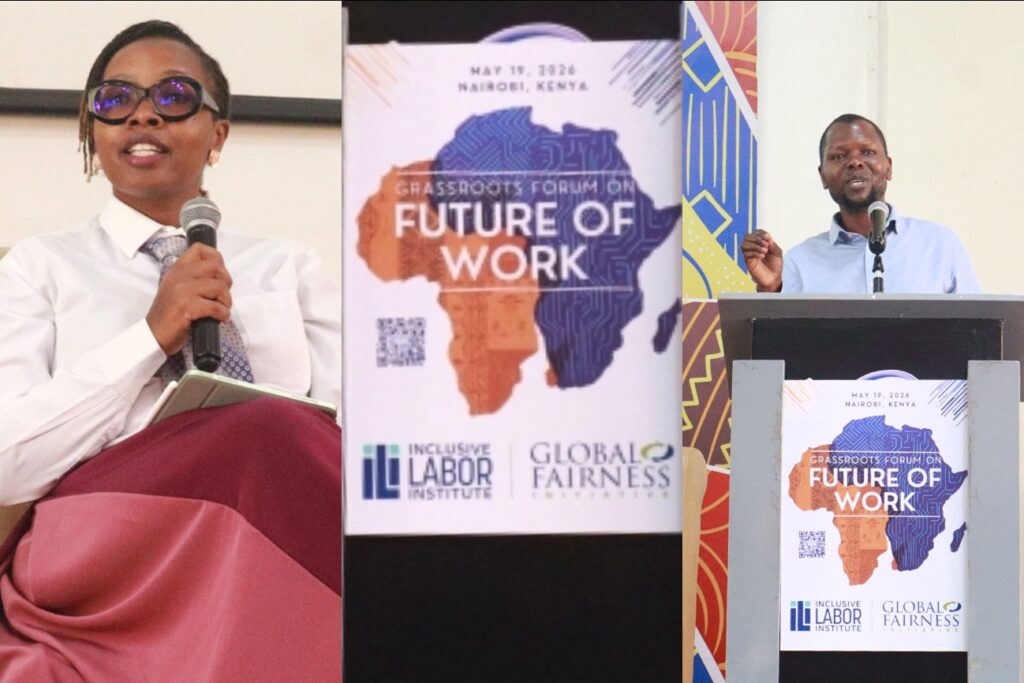
That reality took center stage at the Grassroots Forum on the Future of Work held at the Kenya Institute of Curriculum Development (KICD) in Nairobi on June 18, 2026, where workers, policymakers, researchers, trade unionists, employers, and civil society organizations gathered to discuss what the future of work should look like for Africa’s growing workforce.
The message emerging from the forum was unmistakable: the future of work cannot be designed for workers it must be designed with them.
And for many participants, that starts with listening to the women who make up a significant portion of Africa’s informal economy.
According to statistics presented during the forum, approximately 83 percent of Africa’s workforce operates in the informal economy, leaving only 17 percent in formal employment.
Across markets, farms, workshops, transport networks, border points, and digital platforms, millions of workers earn a living without stable incomes, social protection, legal safeguards, or representation in policy discussions. Yet women and youth continue to shoulder the greatest burden.
Victoria Ndungu, Regional Program Director at the Global Fairness Initiative, challenged institutions to stop treating workers as passive recipients of aid and instead recognize them as partners in shaping solutions. “A future cannot be built without listening to the people who actually work,” she said.
Ndungu noted that while conversations about the future of work often focus on technological advancements and economic shifts, many institutions have failed to adapt to the realities workers face every day.
“We seek to create a different space where workers are not just beneficiaries of solutions but part of creating practical solutions that contribute to a more comfortable and dignified working environment,” she said. She added that the pace of change demands urgent action.”The future of work is already here.
The challenge before us is ensuring that our protection, policies and institutions evolve as fast as the workers and innovations shaping our economies.
“The issue of women’s economic participation featured prominently throughout the discussions. Rachel Keuru, a researcher with the Women Economic Empowerment Hub at the University of Nairobi, said many of the barriers women face today are not new but deeply rooted in historical inequalities.
“These barriers have historically been there,” she said. Among the most significant challenges, she noted, is unpaid care and domestic work, which continues to limit women’s ability to pursue leadership opportunities, grow businesses, or participate fully in the labor market.
While women increasingly contribute to both household and national economies, they often do so while balancing responsibilities that remain largely invisible in economic calculations.
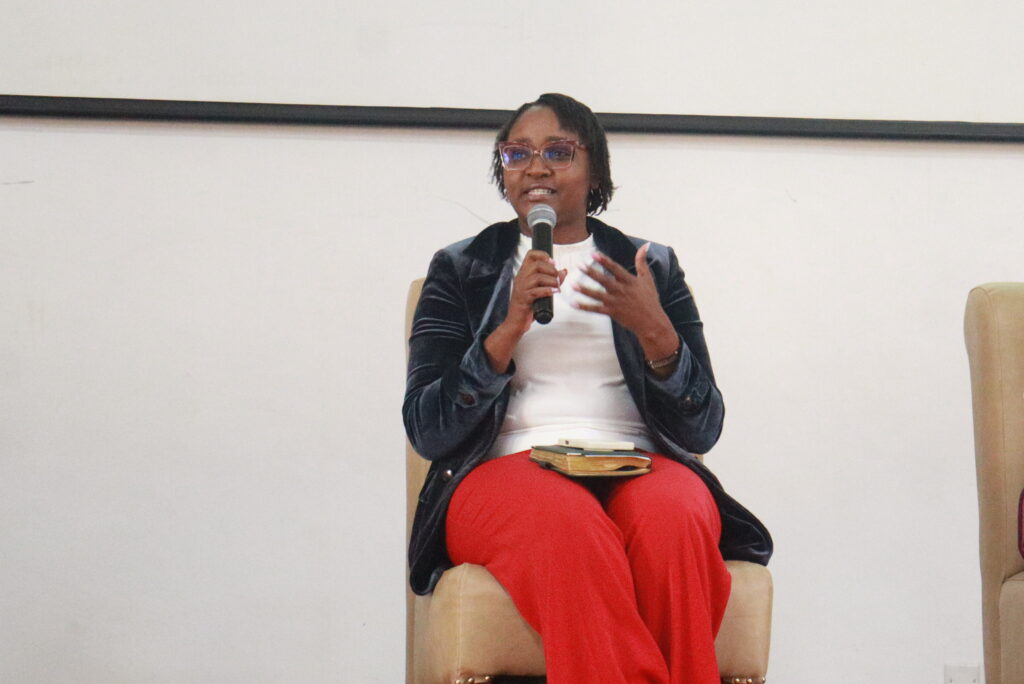
To address this imbalance, Keeru said researchers and advocates are engaging employers in the need to create family friendly workplaces.”We are talking to employers to provide a conducive environment for women with young children to be able to work and at the same time take care of their children,” she said.
She also called for greater regional cooperation, urging East African institutions to examine the conditions women and youth face at border points and other economic spaces where employment opportunities often intersect with vulnerability.
The forum also explored what inclusivity in the workplace should look like in practice.
Participants argued that inclusivity goes beyond recruitment quotas and requires equitable distribution of opportunities, fair reward systems, and meaningful representation of women and youth in leadership and decision-making structures.
Chief Guest Hellen Apiyo, Labour Commissioner at the Ministry of Labour and Social Protection, acknowledged concerns that informal workers often felt invisible in national conversations.
“There is a perception that workers in the informal economy have been ignored in public dialogue, but that is not true,” she said.
Apiyo maintained that government efforts are increasingly focused on ensuring all workers feel recognized and valued regardless of where they earn their livelihoods.
“If you are working in the Jua Kali sector, you should be working in conditions that favor you and not put you at risk,” she added.Beyond economic insecurity, speakers warned of emerging workplace challenges that existing labor laws are struggling to address.
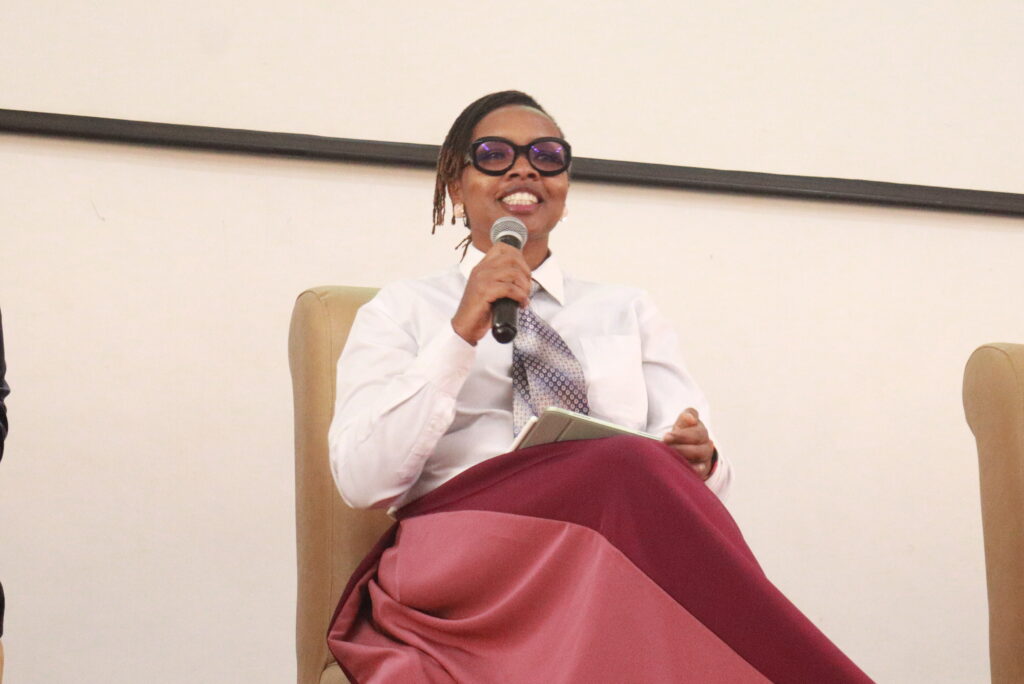
Jacqueline Wamae, Regional Coordinator at International Lawyers Assisting Workers, pointed to the rise of psychosocial risks in modern workplaces, including mental health challenges, digital fatigue, and social isolation.
“All this work comes with psychosocial risks,” she said. As work becomes increasingly digitized and platform based, Wamae argued that labor protections have failed to keep pace. “Our laws do not necessarily envision these risks,” she said.
While digital platforms have created new income opportunities, they have also introduced new vulnerabilities for workers whose livelihoods depend on algorithms and online systems.
Referring to Article 41 of the Constitution, which guarantees every person the right to fair labor practices, Wamae posed a question that lingered throughout the discussions. “Can work really provide dignity?”
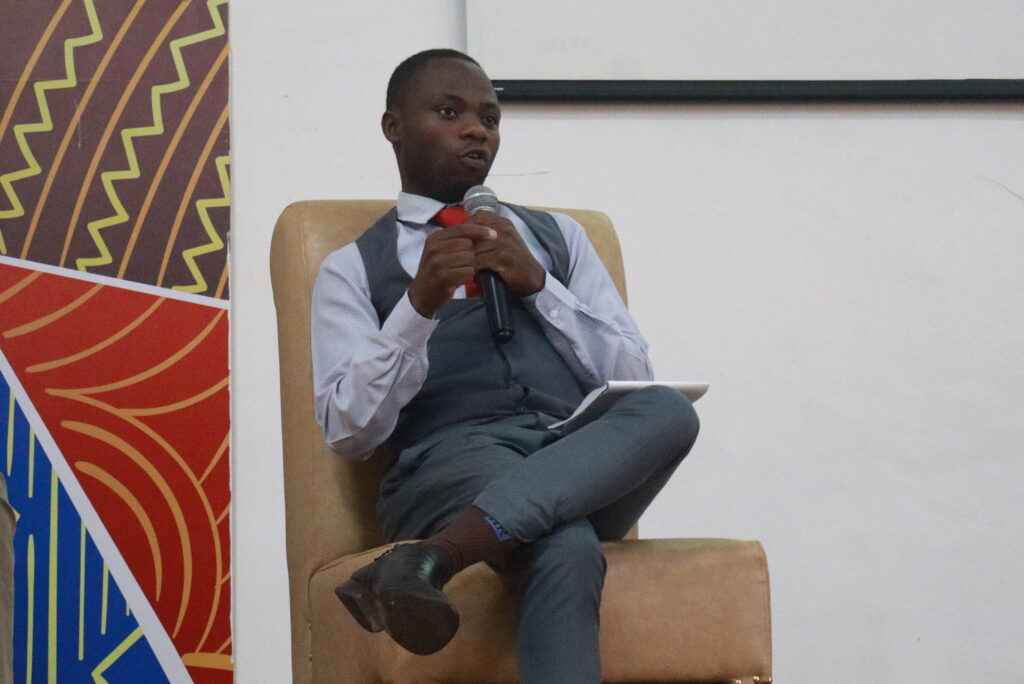
The challenge of securing labor rights for informal workers was echoed by union representative Joshua Ombuya.
While workers in the formal sector can seek redress through the Employment and Labour Relations Court, Ombuya questioned where informal workers should turn when disputes arise.”Issues that arise from the formal sector are dealt with in the Labour and Employment Court. Where do we take issues that arise from the informal sector?” he asked.
He revealed that unions have submitted proposals to the Labour Commission seeking stronger labor protections and more accessible mechanisms for resolving disputes involving informal workers.
Organizing workers remains difficult, he noted, particularly because many operate from temporary or constantly changing worksites.
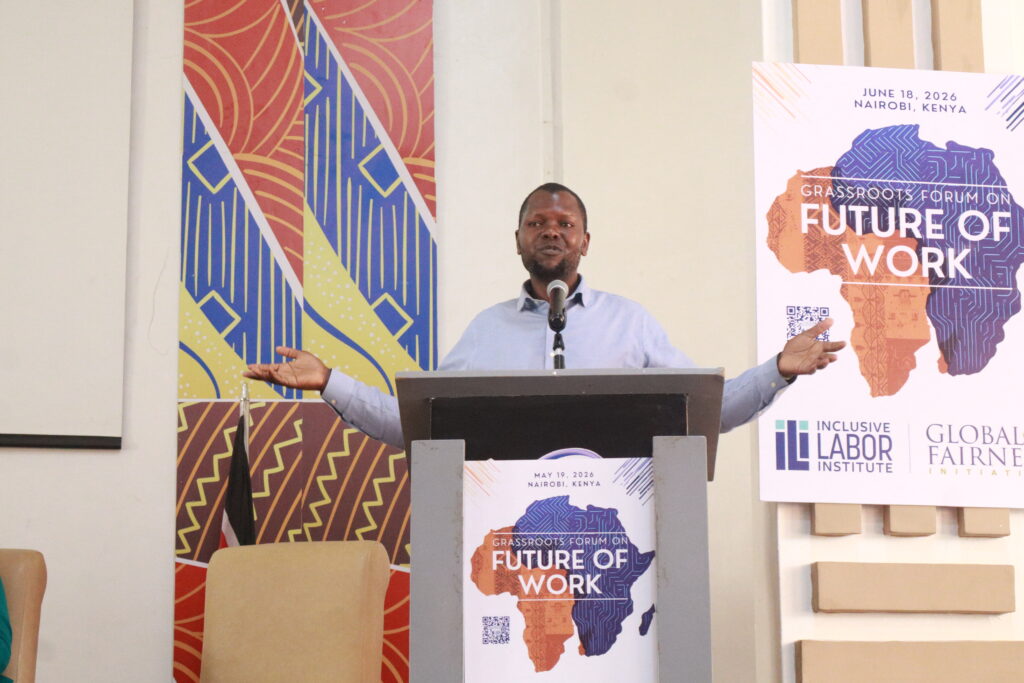
For Hillary Oluoch Oketch, Secretary General of the Ambira Jua Kali Association, the statistics discussed at the forum reflected everyday realities.”About 17.4 million workers are in the informal economy.
That is a number that cannot be ignored,” he said. Oketch outlined the challenges facing informal workers, including costly compliance requirements, unstable incomes, fierce competition, limited access to financing, and the growing trend of formal companies outsourcing jobs into informal arrangements.
For many workers, he explained, missing a day’s work means losing a day’s income.
The expansion of digital work has brought new opportunities but also new risks.”Many people wake up to find their accounts banned and are forced to start from scratch,” he said.He also highlighted frustrations surrounding social protection reforms, citing his own experience with healthcare contributions.”I used to pay KSh6,500 annually under NHIF.
At the moment I am paying almost KSh13,000, and the services may even be worse than they were before,” he said.As discussions drew to a close, participants agreed that Africa’s labor future cannot be shaped solely in government offices, boardrooms, or international conferences.
The workers who build roads, repair machinery, sell goods in markets, transport passengers, create digital content, cross borders to trade, and support families through informal enterprises must be part of the conversation.
Their demands were straightforward: stronger social protection, safer workplaces, recognition of skills, flexible safety nets, and a seat at the table where decisions are made.
For the women whose labor sustains households and economies alike, the call went even further.They are no longer asking merely to participate in the future of work. They are demanding the power to help define it.