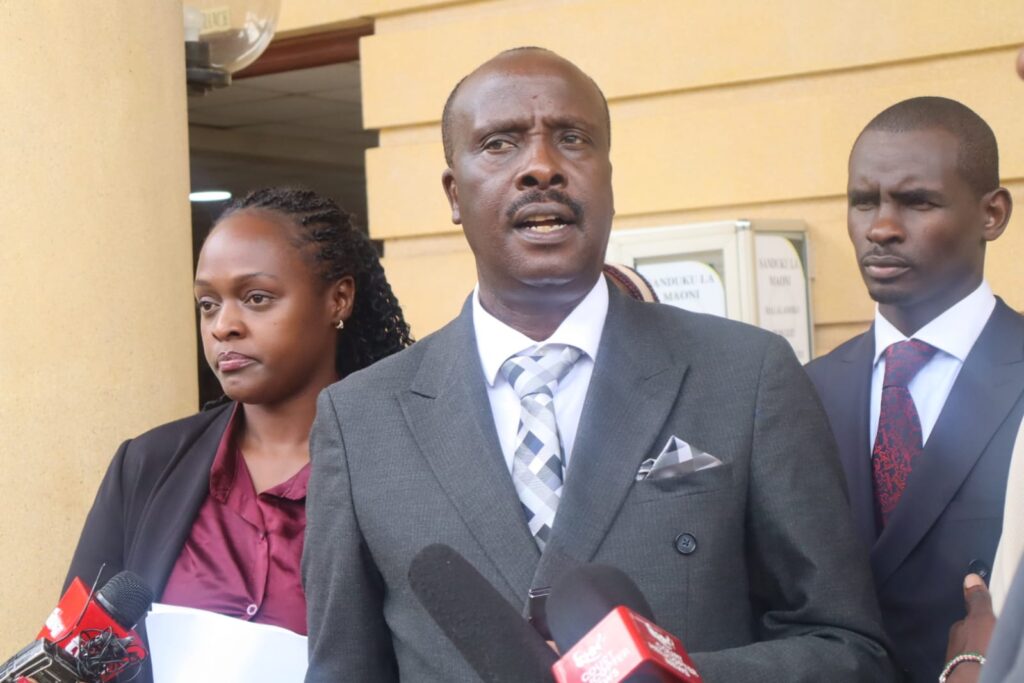
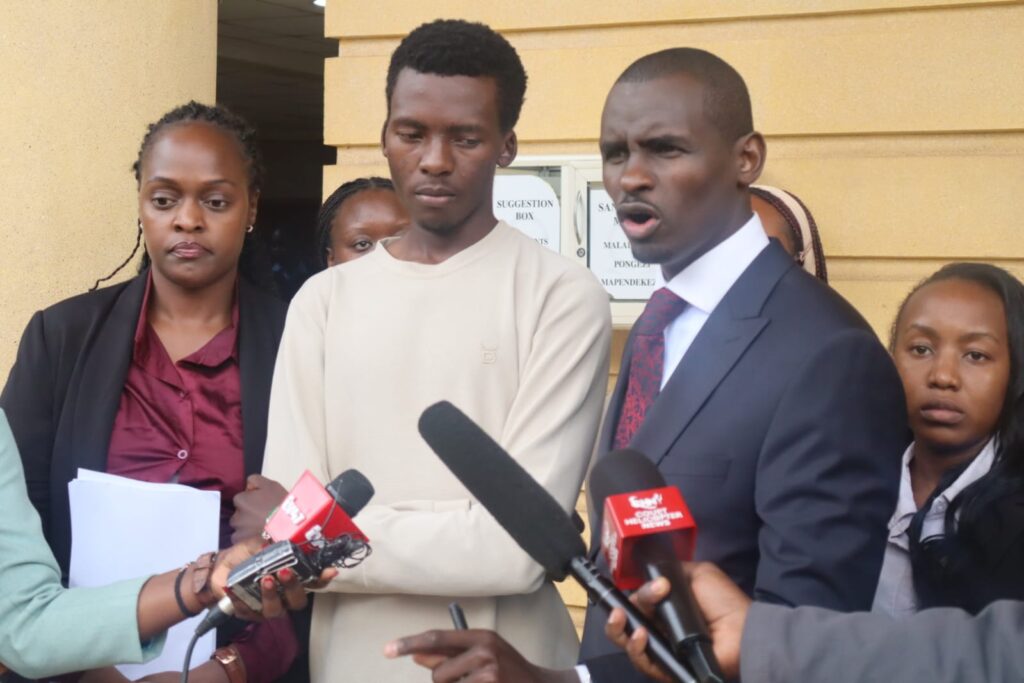
Advocate Danstan Omari has lodged a constitutional petition at Milimani law Court on Tuesday, 24th February 2026, against Safaricom PLC, seeking Sh200 million in damages over what he describes as a breach of his client’s constitutional right to privacy.
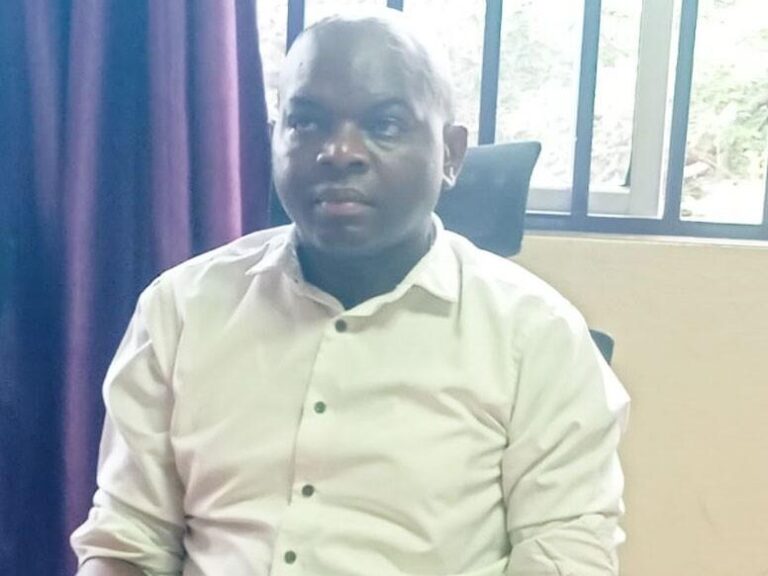
The case stems from the arrest and prosecution of David Mokaya, who was recently acquitted. Omari contends that Mokaya was subjected to a full criminal trial based largely on personal data allegedly accessed and shared with law enforcement unlawfully and without his consent.
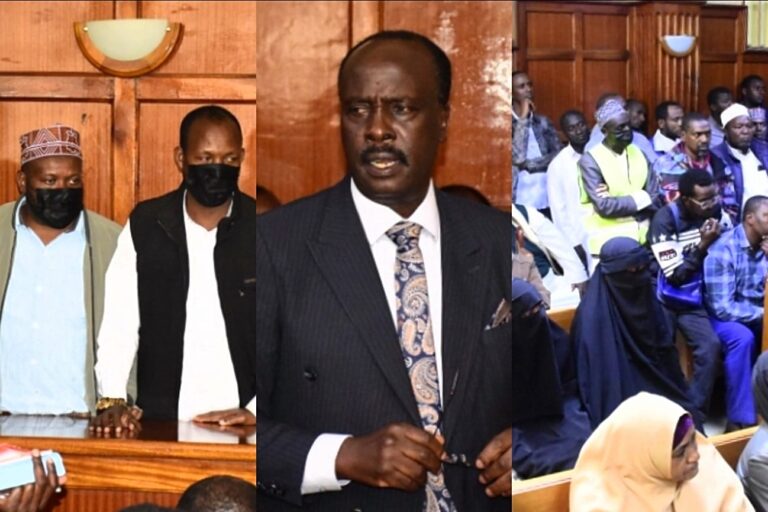
Court records indicate that Mokaya was arrested in Eldoret on November 15, 2024, before being presented at Milimani Law Courts. During the proceedings, the defence argued that crucial evidence relied upon by the prosecution originated from Mokaya’s private mobile data, which they claim was released improperly.
Speaking to the press, Omari stated that while Safaricom has consistently maintained it does not disclose subscribers’ location or private information without due process, testimony presented during the trial appeared to contradict that stance.
According to Omari, one of the company’s witnesses admitted in court to obtaining information from Mokaya’s phone without a court-issued warrant. He argued that as a telecommunications provider, Safaricom bears a constitutional and statutory duty to safeguard customer data, and that failure to do so amounts to a violation of fundamental rights.
Omari further invited other individuals who believe their personal data may have been unlawfully shared to join the petition.
He also rejected Safaricom’s position that requests from investigative agencies are merely procedural and subject to judicial oversight, insisting that no entity operates above the Constitution.
Co-counsel Martina Swiga noted that in acquitting Mokaya, the trial court observed that his right to privacy had been infringed. She said the defence had attempted to have Safaricom held accountable within the criminal proceedings, but the company argued that the court had not explicitly assigned it liability.
Swiga maintained that much of the prosecution’s case was built on data allegedly extracted from Mokaya’s phone without proper judicial authorization.
Another member of the legal team, Shadrack Wambui, alleged that Safaricom’s involvement extended to directing police officers to Mokaya’s residence, leading to his arrest.
The lawyers disclosed that efforts to reach an out-of-court settlement did not bear fruit after Safaricom declined a compensation proposal.
They have now escalated the matter to the Constitutional and Human Rights Division of the High Court, seeking Sh200 million in damages for the alleged violation of Mokaya’s privacy rights.
The petition is currently awaiting directions from the court.